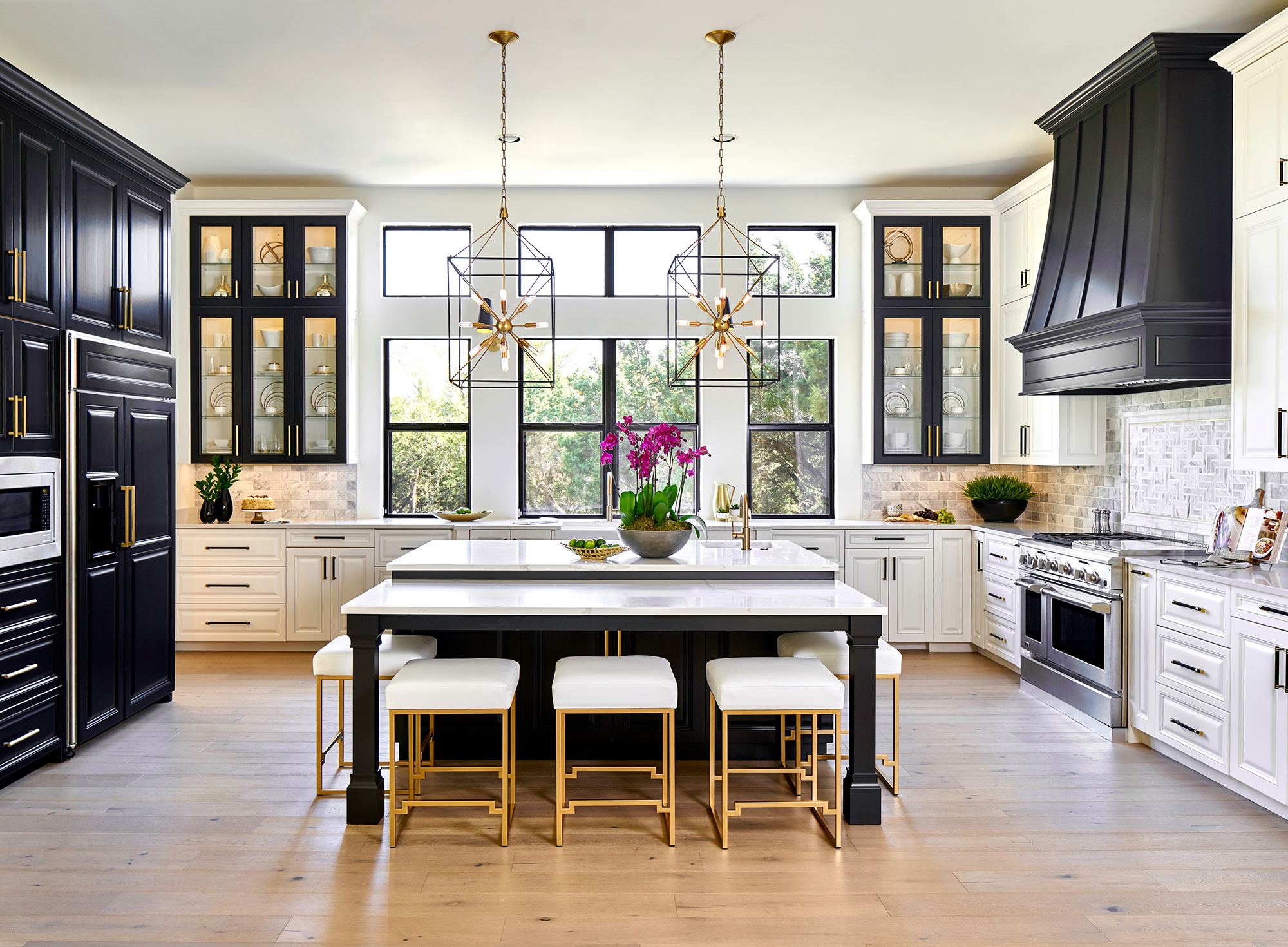

Painting cabinets two different colors can elevate a kitchen to a whole new level, design-wise. While it used to be considered the province of designers only, we now see two-tone kitchens quite often. But is there a reason to try a tone-tone kitchen? Or should you stick to just one tried-and-true color for your kitchen cabinets?
What is a two-tone kitchen?
First, let’s look at how two different colors are often used in kitchens, to great effect.
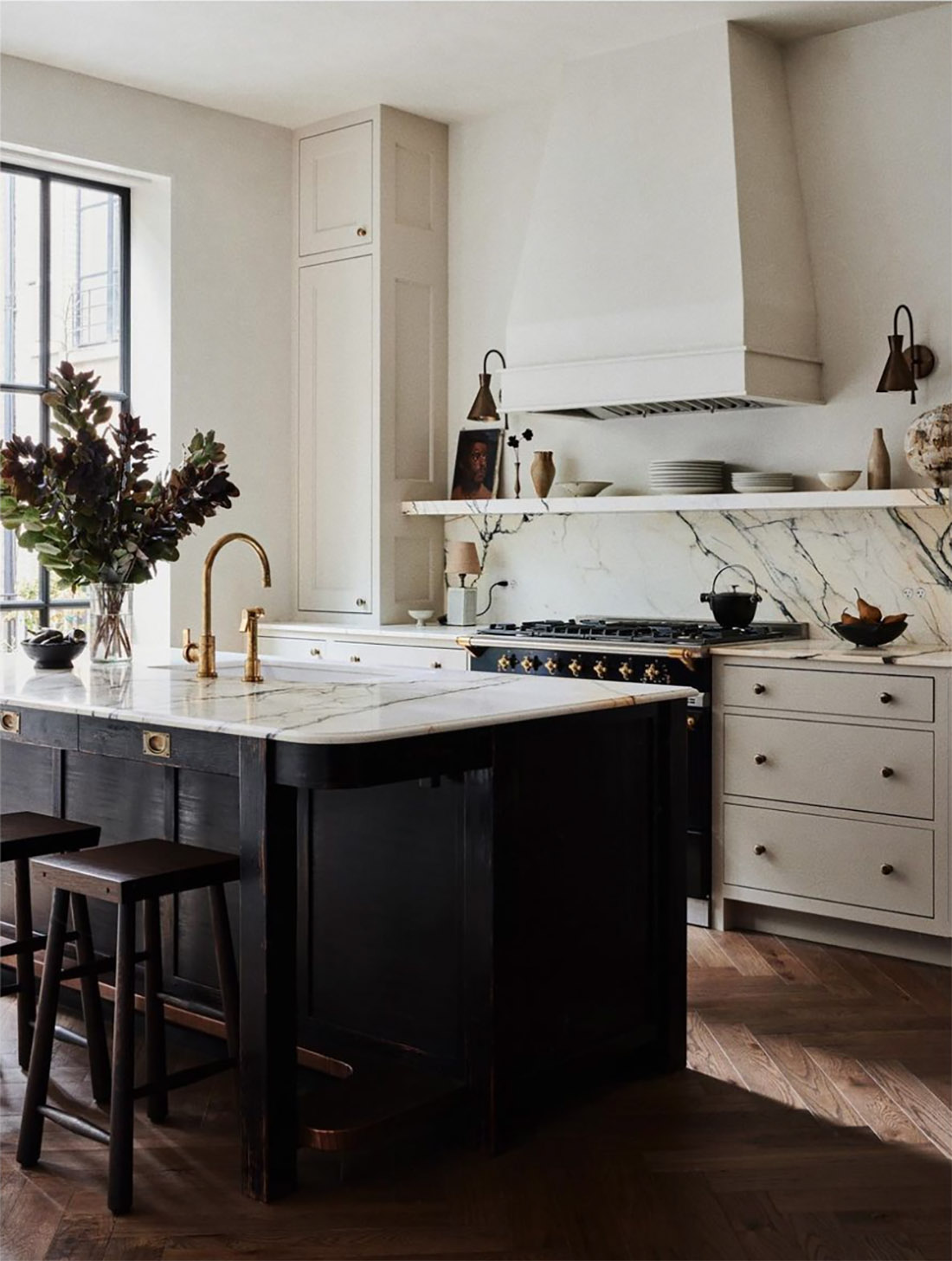
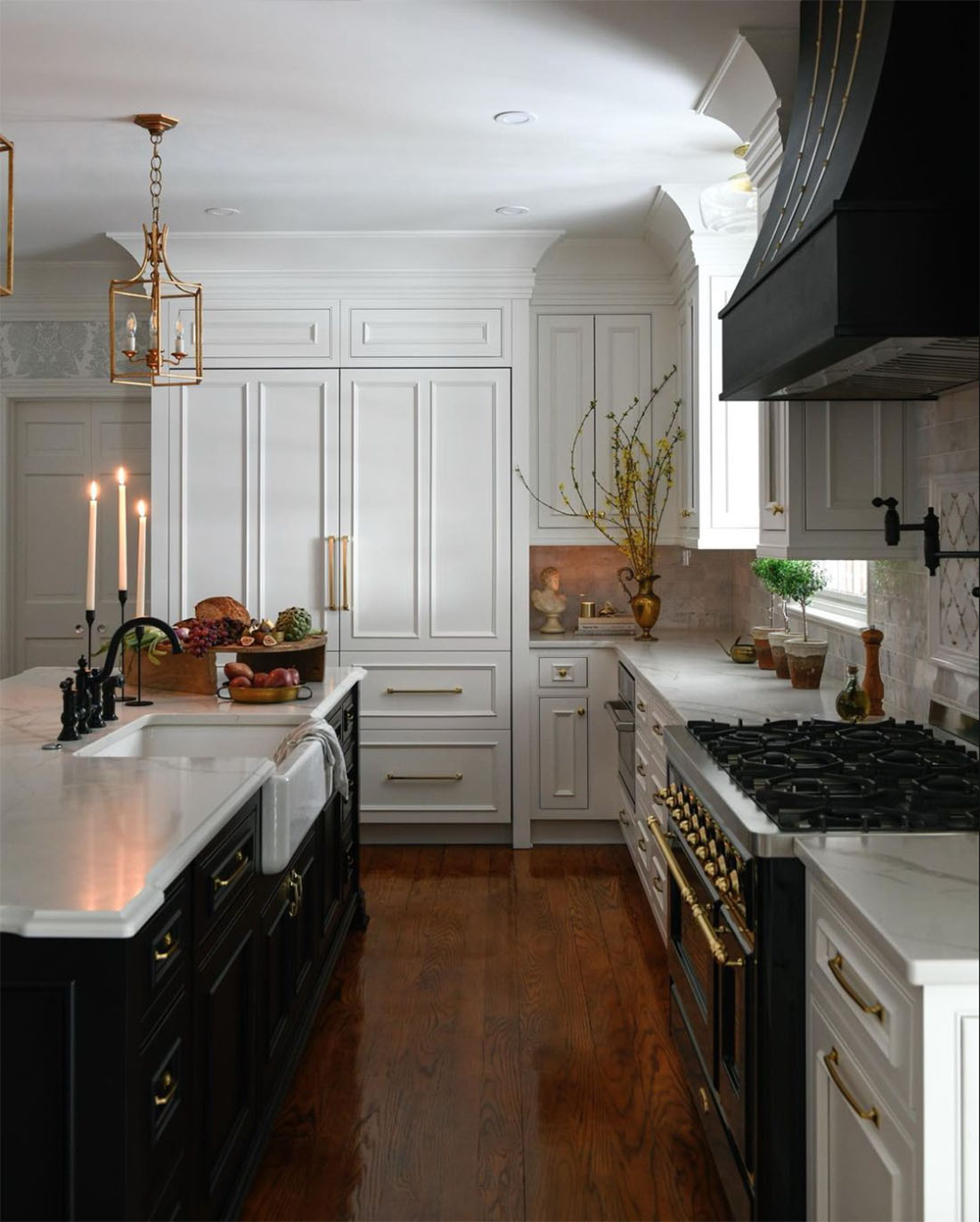
Pairing a light neutral like white with a strong color
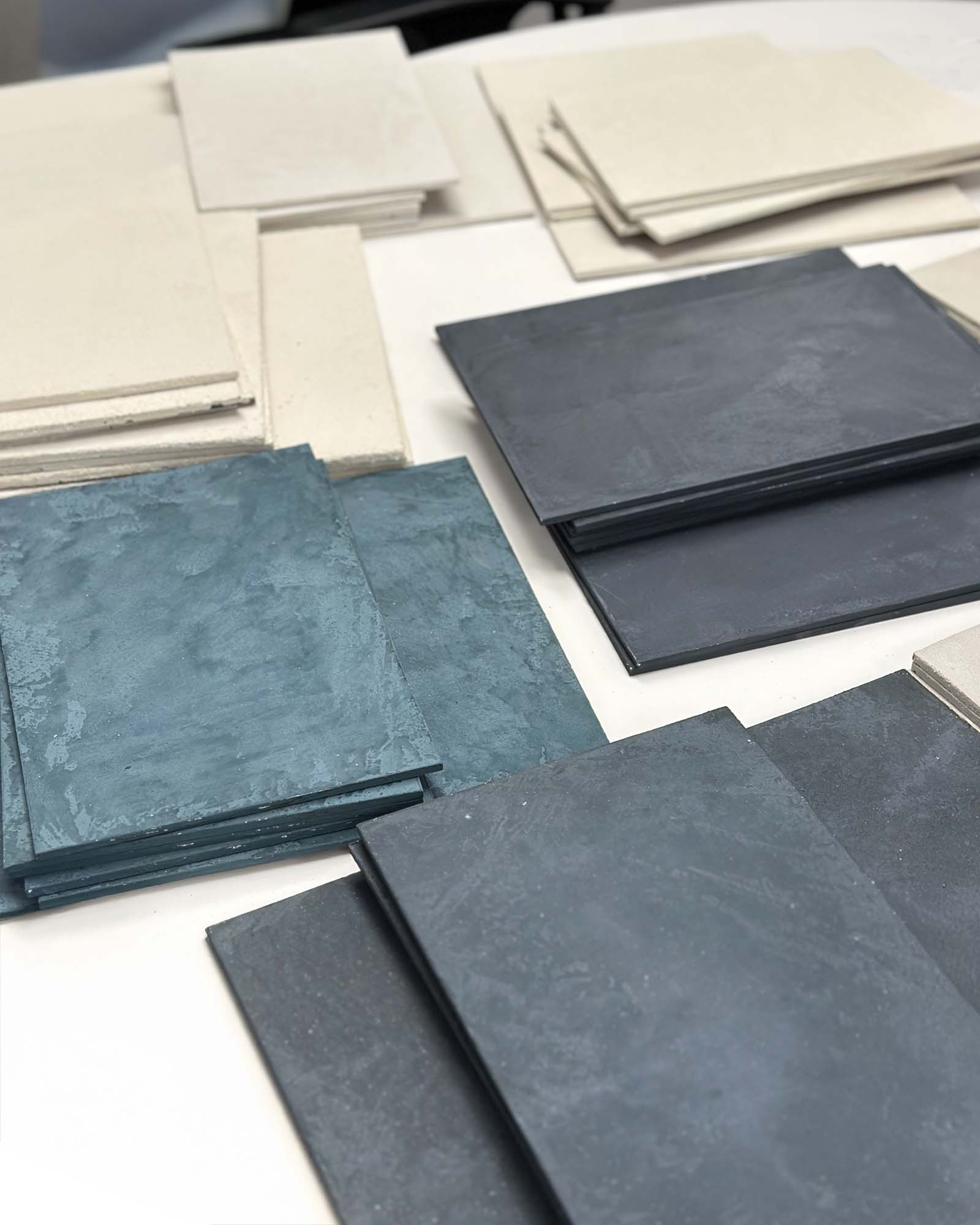
Most of the time, one of the two colors in a two-tone kitchen will be a white, off-white, or very pale neutral. This provides a nice fresh contrast with the second color, whether it is deep like a navy or black, softer like a pale green or taupe, or a bold, striking color with lots of energy.
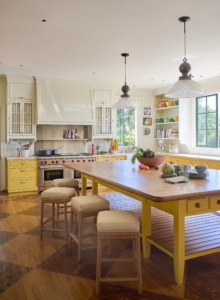
Pairing a light neutral with stained wood
This is a popular option, and often considered a safer one. Stained wood injects a traditional element that can balance a two-tone kitchen nicely, and in more contemporary kitchens, brings a nice touch of warmth.

Placement of the two colors
Usually, the white or lighter color is used on the upper cabinets, with the accent color on the lower cabinets or, perhaps, only on the island and range hood. As long as the colors are appropriately balanced throughout the kitchen, the space will feel well-designed and pleasing.
Reasons to consider painting cabinets two different colors
It’s the perfect compromise between the three main design options
Stained wood kitchens
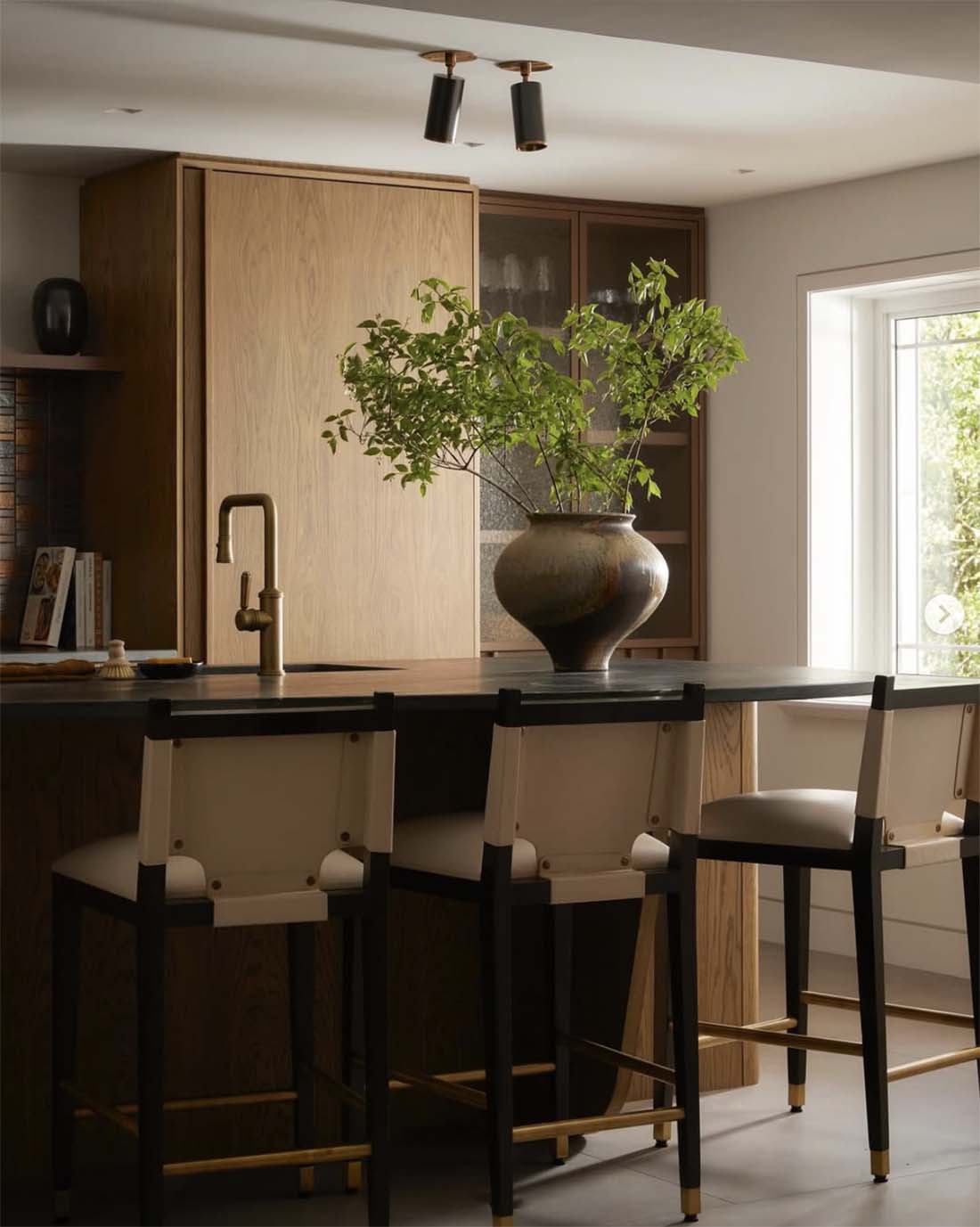
For decades, we were surrounded by stained wood cabinets. Ironically, these are now the very same cabinets that residential painters like us are constantly being asked to paint, because in most cases, older stained cabinets had a very strong warm tone, almost an overpowering orange. Fully-stained kitchens (on finer grained woods) are now enjoying a bit of a resurgence, but the look is not for everyone. When we do see stained wood kitchens now, the look is lighter and sleeker than the heavy oak cabinets of old.
All white or pale neutral kitchens
Hence the resurgence of the all-white kitchen. Although it’s sometimes considered a trend, this is a timeless look that will never go out of style. Whether traditional or contemporary, in a hundred-year-old farmhouse or a modern high-rise condo, a white kitchen almost always works.
We’re necessarily talking about stark white, either! Any pale neutral that can be considered off-white, cream, or even beige, or a light color such as cashmere or mushroom, falls into this category. As interior design trends have evolved to include more warm neutrals, these kitchens are increasingly popular.

Kitchens all in a bold color
However, not everyone wants an all-white (or pale neutral) kitchen. And the pendulum constantly swings back and forth in interior design. Whites, off-whites, and pale neutrals are here to stay, but we’re also seeing a return to color, pattern, and the fun of maximalism. If you love strong color, you may be getting your kitchen cabinets painted in a rich blue or muted green, or even black.


But what if you’re over stained cabinets, don’t want an all-white kitchen, but don’t want to go “full color” either?
That’s where painting cabinets two different colors is the perfect compromise.
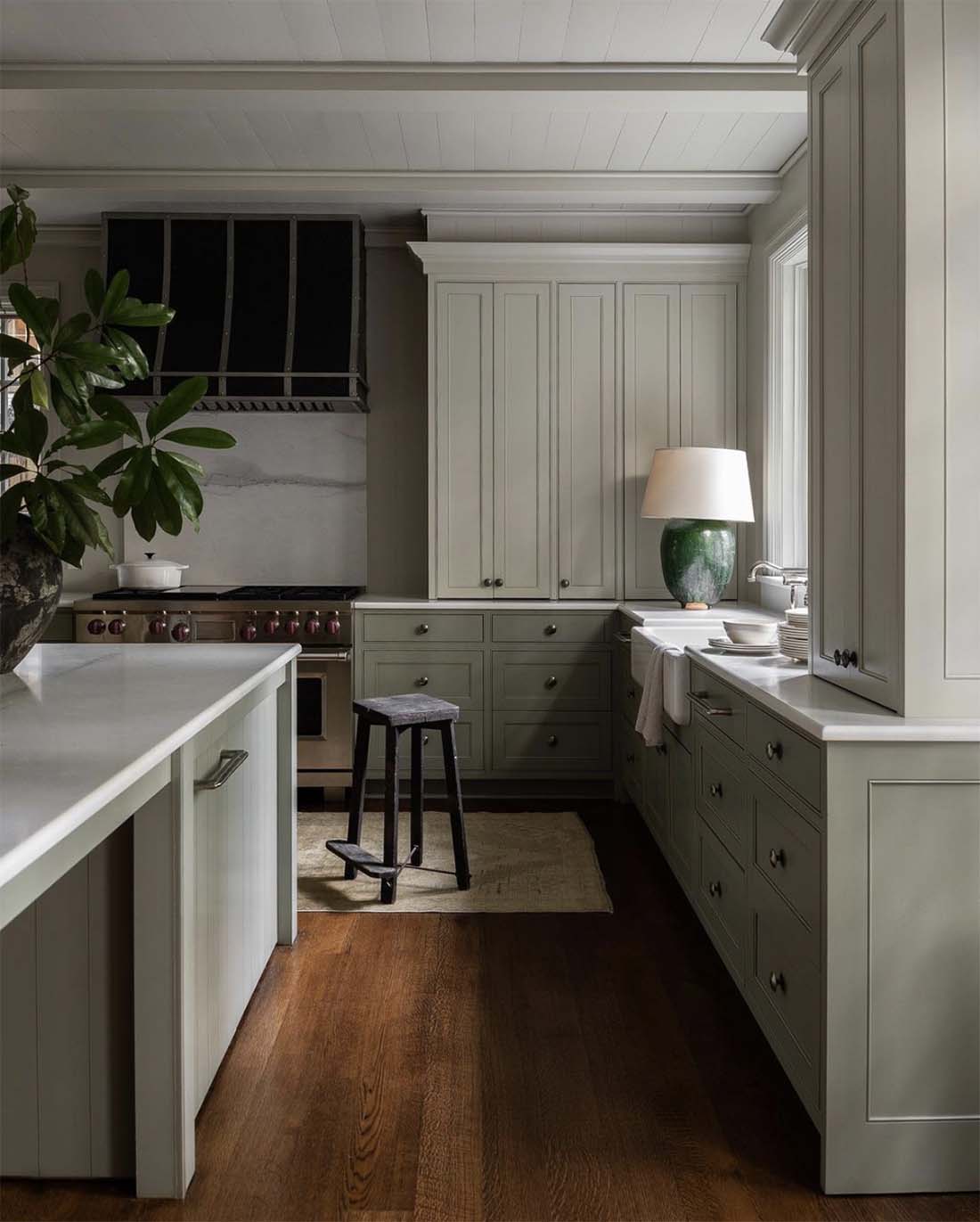
You can keep the classic sophistication of white on your upper cabinets and probably your backsplash, but inject some color and personality in your lower cabinets and your kitchen island. If you’re worried that an all-white kitchen will look sterile, but a boldly-colored is just not your dream, you can split the difference by choosing a white or pale neutral for your upper cabinets, and painting your lower cabinets in a rich, or fun, or unexpected color.
Using two colors can make a bland kitchen more interesting.
There are several ways to liven up a boring kitchen, or make it look more custom, from easy (new pendant lights and cabinet hardware) to challenging (new counters or backsplash). But for sheer impact, there’s nothing like painting your cabinets, which are the largest visible surface area in your kitchen.
The nice thing is that you may be able to paint just half of your cabinets. If the uppers are already a white or light neutral, then paint your lowers in a contrasting color. Or if your lower cabinets are in a stained wood that you actually like, paint your upper cabinets white.
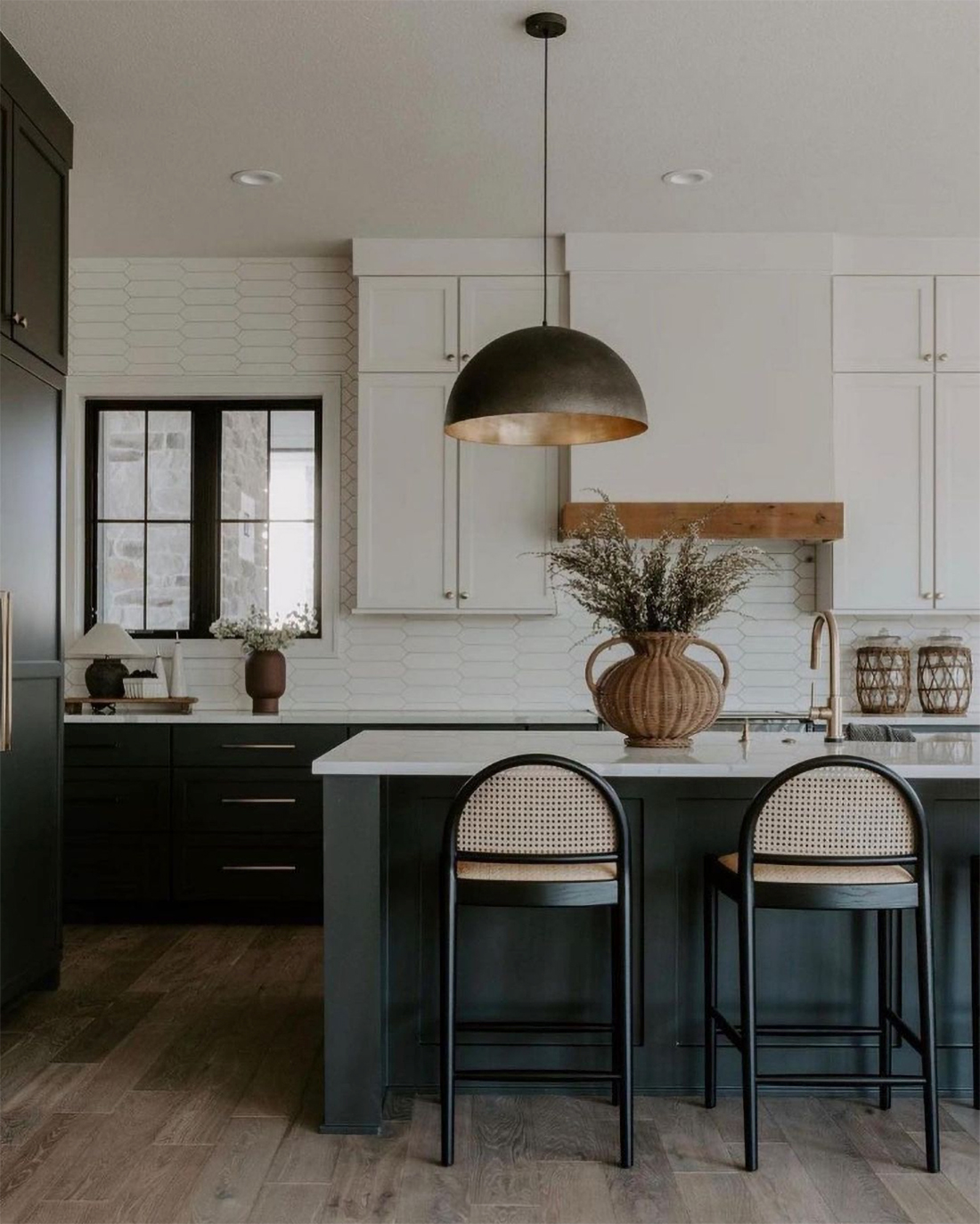
You won’t be able to get away with this if the whole kitchen is unattractive, but if you don’t like an all-neutral kitchen and you’re not going to do a full remodel any time soon, consider introducing a second color on your cabinets.
A two-tone kitchen with a light color up top can minimize the visual heaviness of upper cabinets
If your kitchen tends to be smaller or has a large expanse of upper cabinets, those uppers can feel very prominent and “in your face”. If you need to keep the uppers for storage and don’t want to try open shelving, paint your uppers a light color, and use a dark color on your lower cabinets. You could paint the whole kitchen white, of course, but painting the upper cabinets a light color and the lower cabinets dark gives the lower half of the kitchen more visual weight. Your uppers will be less dominant.
Using multiple colors is more unique and creative.
This won’t apply to everyone, but most homeowners who paint their cabinets two different colors are making a creative choice, rather than defaulting to a more standard neutral or classic white. You can’t enter a two-tone kitchen without instantly knowing that someone had a creative vision for the space, looked at various design options, and made some carefully considered decisions. Two-tone kitchens are “intentional”, where you can see that a creative mind guided the process. If you love the creativity of interior design, a two-tone kitchen might be a great way to express your personality in your home.
Tips for designing a two-tone kitchen
Select the right colors to pair together
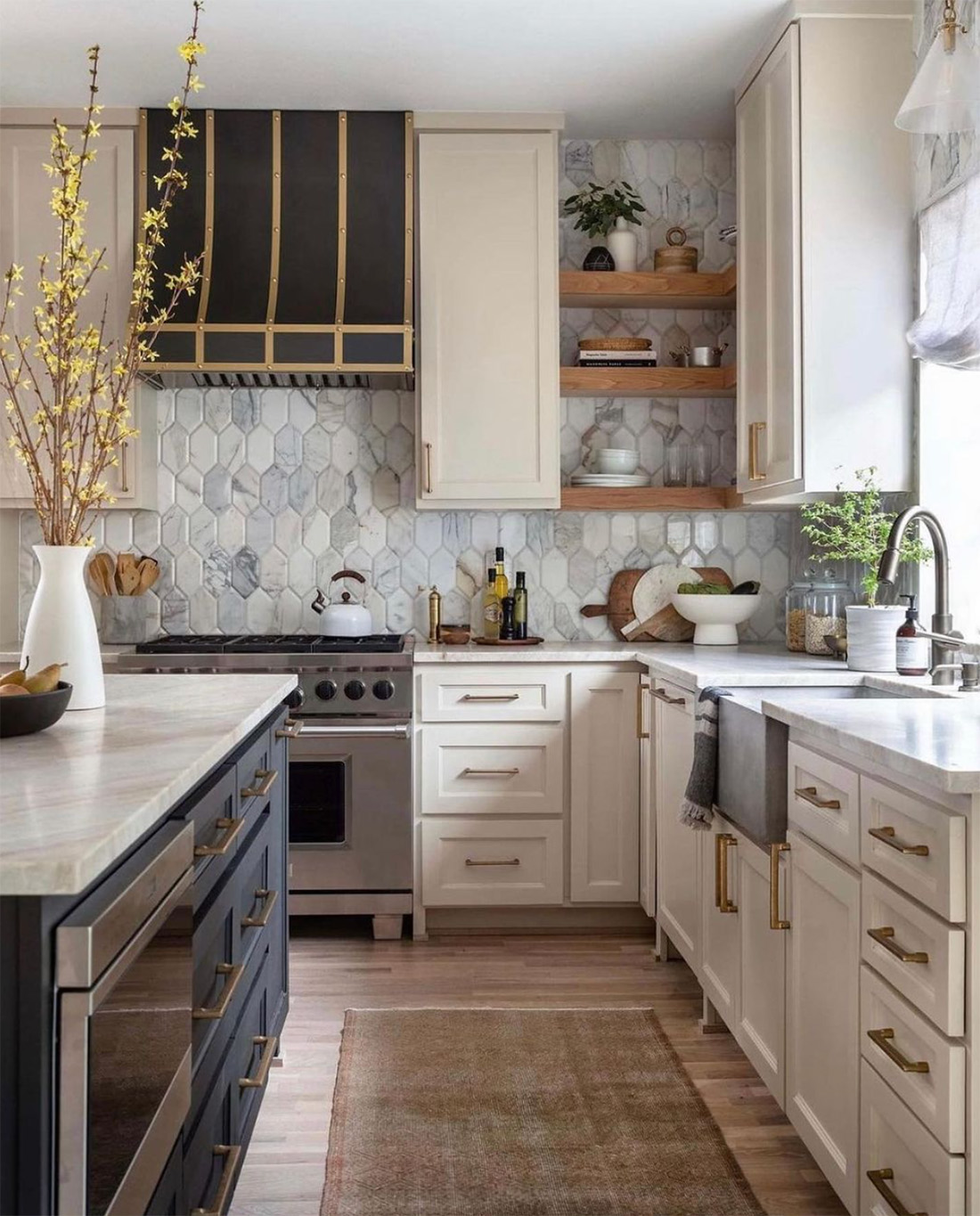
Typically, one of your colors will be a white, off-white, or a very pale neutral. This will keep your kitchen from feeling chaotic or disjointed, and helps give your eyes a place to rest. Then the second color can provide a deep contrast, or a pop of color. Blues and greens are popular cabinet colors in two-tone kitchens.
This doesn’t apply only to traditional, solid paint colors! You may decide that keeping part of your cabinets in a wood stain evokes a certain warmth or traditional vibe that you love. If your kitchen already includes stained cabinets, keeping one section stained may be a good option. Just make sure the stain color works with your updated color palette. That outdated red oak stain from the 1990’s may not be the best option. You want your kitchen to look updated, not like your remodel only covered half your cabinets.
Decide which sections of cabinetry will get which color
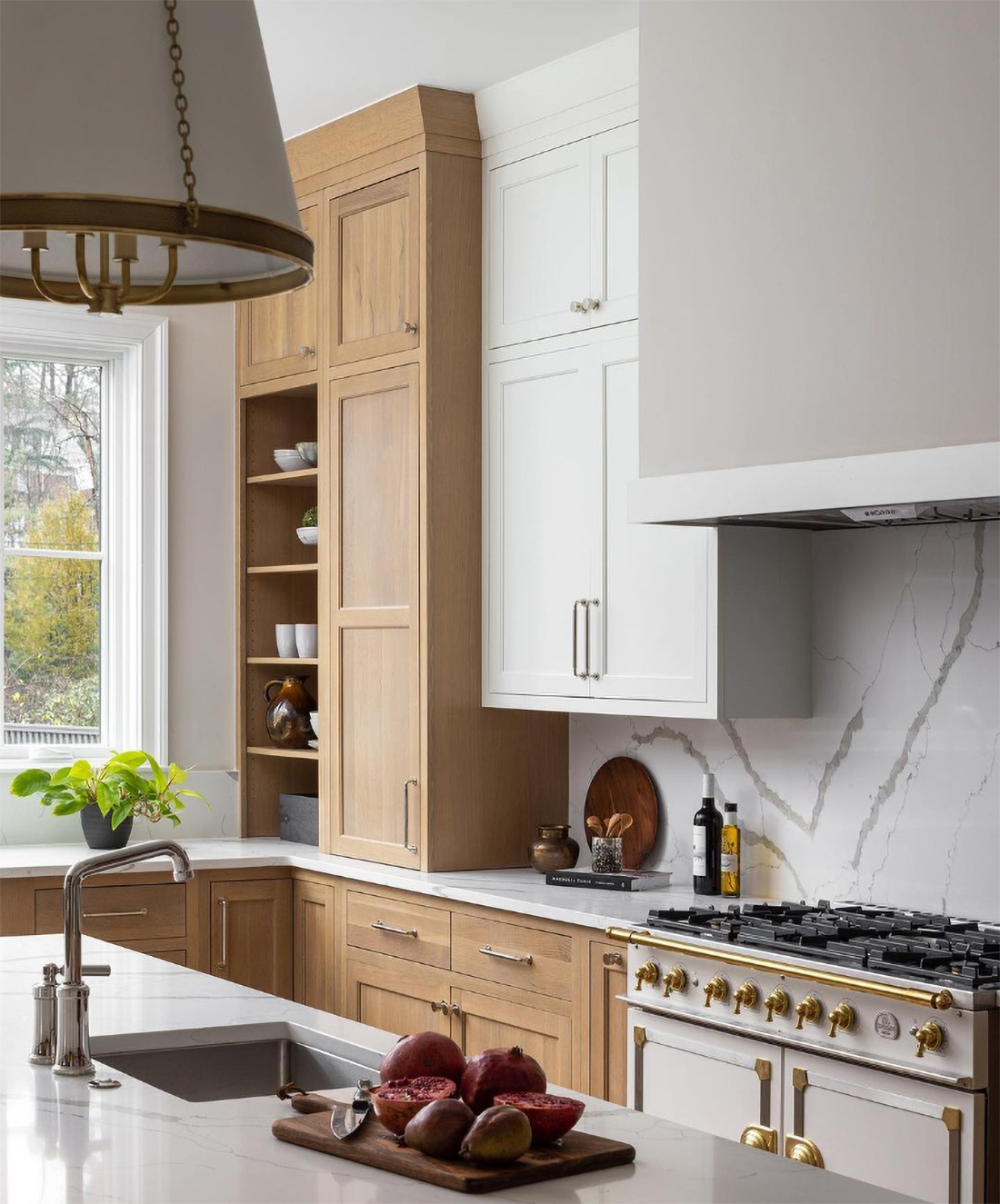
Do you want the deeper color (or stain) to be on your lower cabinets around the whole perimeter of the kitchen, or just on one particular wall? Do you want the island to be the only colored section?
Keeping the deeper color on your lower cabinets (or island only) is typically a good idea, because it visually grounds your kitchen. Keeping the light color on the upper sections helps draw the eye upward and keep your kitchen from feeling too dark or heavy.
For a sophisticated option, you might consider doing individual sections (not just lowers cabinets) in the accent color. Perhaps a side wall of cabinetry is done in the darker color, or the island and range hood together, or a vertical section in a corner. An interior designer can help you explore options.
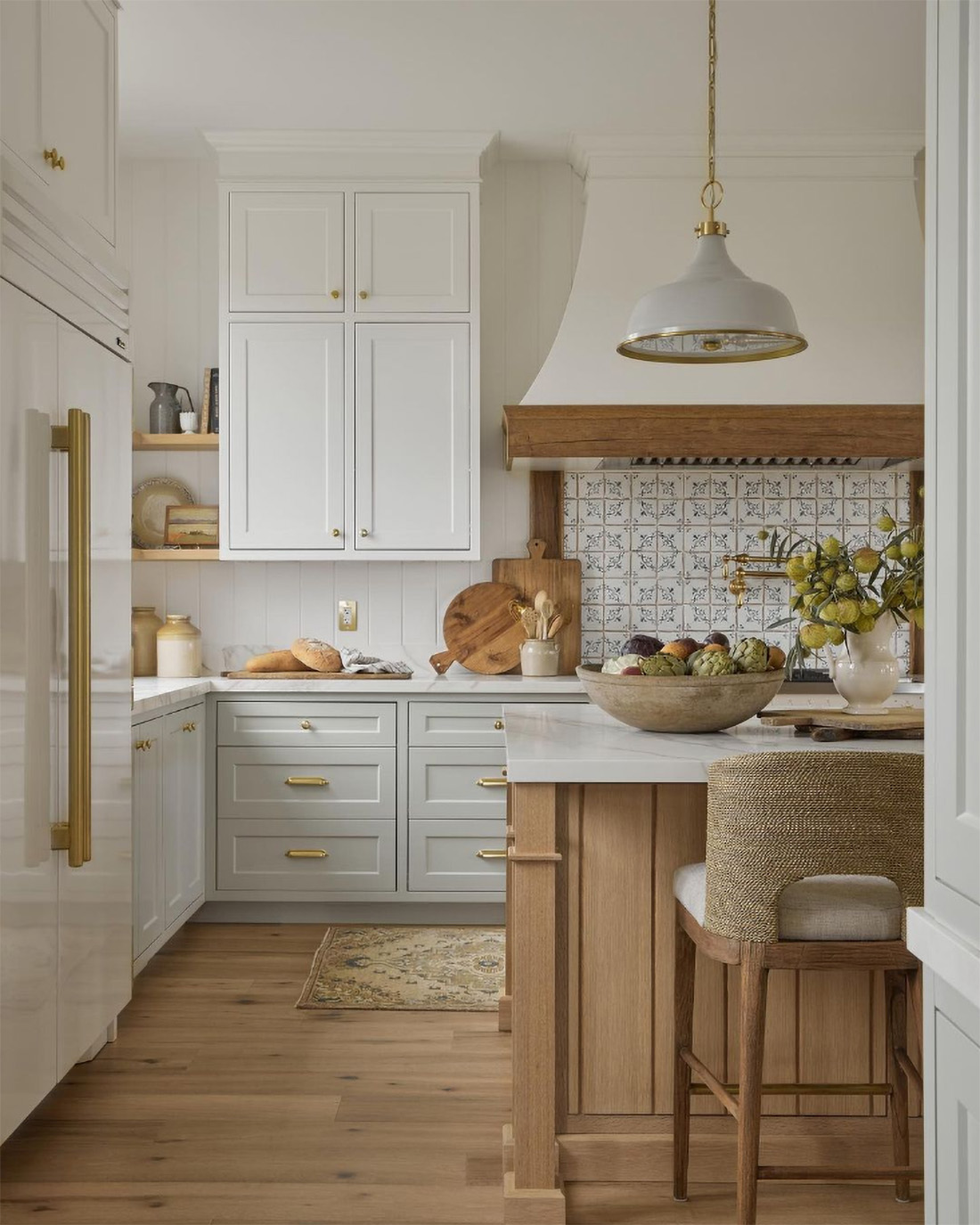
Another option is to introduce a third “color” – actually, using two colors (white or off-white, plus a deeper color) and a stain. In this iteration, the white or light color goes on the uppers, the deeper color on the lowers, and the stain is on the island. This adds a layer of complexity and richness that can work very well, especially if the stained wood is repeated judiciously in trim on the range hood, around the windows, or in open shelving..
If possible, get a mock-up or rendering of your proposed kitchen
Especially if you’ll be making out-of-the-box choices like only doing certain sections of cabinetry in a color, consider consulting with an interior design, and ask about getting a rendering of your space. Even a friend who knows Photoshop can help.
Final thoughts
Using two colors on your cabinets is no longer considered a daring or risky move. As we cycle away from cookie-cutter design or safe choices like all-neutral or all-stained cabinets, painting cabinets two different colors has become a popular way to personalize a kitchen and give it a sense of style and sophistication. A good palette may include a white or light neutral for the upper cabinets, a deeper, richer color for the lowers, and possibly stained wood on an island for even greater variety. Once the new color goes in, you’ll find yourself in love with your updated kitchen!